אודות השומר הצעיר קובה
אודות השומר הצעיר קובה
אודות השומר הצעיר קובה
About Us
גרעין עליה ראשון של התנועה \
לקיבוץ געש
גרעין עליה הראשון מקובה : חלום שהתגשם
אנחנו שמחים לבשר לכם שביום חמישי ה 28- ביוני 1951
תתקיים החנוכה החגיגית של הקיבוץ הלטינו-אמריקני געש
במדינת ישראל.
חברי קיבוץ זה הם חלוצים לטינו-אמריקנים
ואיתם נמנית גם קבוצת השומרים הקובנים שעלו ארצה לפני
שנה...
געש – הקיבוץ הלטינו-אמריקני הראשן – מונה 150 צעירים
שהגיעו מאורוגוואי, ארגנטינה, בוליביה, ברזיל, מקסיקו, צ'ילה
וקובה, והם חלק מהדור היהודי שהקים את התנועה הציונית
החלוצית שהפכה לבסיסה של הציונות המגשימה באמריקה
הלטינית.
נכון להיום, לקיבוץ געש יש מקורות ייצור משלו, חיים
תרבותיים וחברתיים פעילים מאוד ו 25- ילדים שהם פרחיו
היפים והרעננים ביותר...
הטקסט הקודם הופיע במכתב ביידיש שנכתב ביוני 1950 על
ידי העסקן הקהילתי סנדר קפלן ונשלח לוועדות המנהלות של
המוסדות היהודיים השונים. המכתב בישר על הקמת הקיבוץ
הלטינו-אמריקני הראשון, תאר את ראשית דרכו ומנה את אפיוניו
המרכזיים.
הקמת הגרעין הלטינו-אמריקני והקמת הקיבוץ היו תולדה
והמשך ישיר של הקמת מדינת ישראל, אירוע מכונן ששינה את
ההיסטוריה היהודית בת-זמננו ושהשפיע השפעה מכרעת לא
רק על היישוב היהודי בפלסטינה המנדטורית, אלא על הקהילות
היהודיות בתפוצות באשר הן. השומר הצעיר בקובה לא היה יוצא
מהכלל ולזה נתייחס להלן, בפריסת מניפה שתלקט אירועים,
מצבים וחוויות המשקפים את מרצו ואת תנופתו.
מאז ימי הבראשית הלא רחוקים שלה, הצליחה התנועה להתגבר
על המכשולים ולא להיעצר. כפי שצוין באחד מהפרקים הקודמים,
עוד בשנות השלושים – כשאיש לא העז לחלום שחלוצי אמריקה
הלטינית יממשו את חזון העלייה – הצליחו שניים מהמייסדים בכך
הודות לסרטיפיקטים שהנפיק המנדט הבריטי ושהוקצו לקובה.
זאת ועוד: כדי לנצל גם את הסרטיפיקט השלישי, אחד מהשומרים
נשא בנישואים פיקטיביים צעירה שגם היא הייתה חברה בתנועה.
הישגי התנועה מבחינת ההגשמה הציונית חרגו משורותיה שלה,
כפי שניתן ללמוד מאפיזודה בעלת משמעות סמלית: קצת יותר
מעשור לאחר הנפקת הסרטיפיקטים הנ"ל, גם "החותן והחותנת"
של אותו עולה ראשון זכו לאישורי עלייה משלהם, כפי שמתואר
במכתב שההנהלה הסוכנות היהודית שלחה לקובה ב 12- ספטמבר
1947 בעקבות רישיונות העלייה שהונפקו לטובת קרובי המשפחה
של תושבי הארץ:
אנחנו מצרפים למכתב זה את רשימת האנשים בארצכם
שלמענם הנפיקה המחלקה לעלייה רישיונות עלייה, בהתאם
לבקשות שהועלו על ידי קרובי המשפחה שלהם...
בשנים הראשוניות ההן, הוכיחה התנועה הקובנית את יכולתה
לשלב בין המשך קו פעולתה לבין חידוש ופתיחות; לקדם יוזמות
ופרויקטים חדשניים מחד ולהתמיד מאידך בפעילותה ביחס
לקהילה היהודית בקובה, העולם היהודי בכלל ומדינת ישראל
בפרט. לשם המחשה בלבד נביא דוגמאות אחדות המממשות את
המשולש שהוזכר כבר.
Shomrim2
גרעין עליה הראשון מקובה : חלום שהתגשם
אנחנו שמחים לבשר לכם שביום חמישי ה 28- ביוני 1951
תתקיים החנוכה החגיגית של הקיבוץ הלטינו-אמריקני געש
במדינת ישראל.
חברי קיבוץ זה הם חלוצים לטינו-אמריקנים
ואיתם נמנית גם קבוצת השומרים הקובנים שעלו ארצה לפני
שנה...
געש – הקיבוץ הלטינו-אמריקני הראשן – מונה 150 צעירים
שהגיעו מאורוגוואי, ארגנטינה, בוליביה, ברזיל, מקסיקו, צ'ילה
וקובה, והם חלק מהדור היהודי שהקים את התנועה הציונית
החלוצית שהפכה לבסיסה של הציונות המגשימה באמריקה
הלטינית.
נכון להיום, לקיבוץ געש יש מקורות ייצור משלו, חיים
תרבותיים וחברתיים פעילים מאוד ו 25- ילדים שהם פרחיו
היפים והרעננים ביותר...
הטקסט הקודם הופיע במכתב ביידיש שנכתב ביוני 1950 על
ידי העסקן הקהילתי סנדר קפלן ונשלח לוועדות המנהלות של
המוסדות היהודיים השונים. המכתב בישר על הקמת הקיבוץ
הלטינו-אמריקני הראשון, תאר את ראשית דרכו ומנה את אפיוניו
המרכזיים.
הקמת הגרעין הלטינו-אמריקני והקמת הקיבוץ היו תולדה
והמשך ישיר של הקמת מדינת ישראל, אירוע מכונן ששינה את
ההיסטוריה היהודית בת-זמננו ושהשפיע השפעה מכרעת לא
רק על היישוב היהודי בפלסטינה המנדטורית, אלא על הקהילות
היהודיות בתפוצות באשר הן. השומר הצעיר בקובה לא היה יוצא
מהכלל ולזה נתייחס להלן, בפריסת מניפה שתלקט אירועים,
מצבים וחוויות המשקפים את מרצו ואת תנופתו.
מאז ימי הבראשית הלא רחוקים שלה, הצליחה התנועה להתגבר
על המכשולים ולא להיעצר. כפי שצוין באחד מהפרקים הקודמים,
עוד בשנות השלושים – כשאיש לא העז לחלום שחלוצי אמריקה
הלטינית יממשו את חזון העלייה – הצליחו שניים מהמייסדים בכך
הודות לסרטיפיקטים שהנפיק המנדט הבריטי ושהוקצו לקובה.
זאת ועוד: כדי לנצל גם את הסרטיפיקט השלישי, אחד מהשומרים
נשא בנישואים פיקטיביים צעירה שגם היא הייתה חברה בתנועה.
הישגי התנועה מבחינת ההגשמה הציונית חרגו משורותיה שלה,
כפי שניתן ללמוד מאפיזודה בעלת משמעות סמלית: קצת יותר
מעשור לאחר הנפקת הסרטיפיקטים הנ"ל, גם "החותן והחותנת"
של אותו עולה ראשון זכו לאישורי עלייה משלהם, כפי שמתואר
במכתב שההנהלה הסוכנות היהודית שלחה לקובה ב 12- ספטמבר
1947 בעקבות רישיונות העלייה שהונפקו לטובת קרובי המשפחה
של תושבי הארץ:
אנחנו מצרפים למכתב זה את רשימת האנשים בארצכם
שלמענם הנפיקה המחלקה לעלייה רישיונות עלייה, בהתאם
לבקשות שהועלו על ידי קרובי המשפחה שלהם...
בשנים הראשוניות ההן, הוכיחה התנועה הקובנית את יכולתה
לשלב בין המשך קו פעולתה לבין חידוש ופתיחות; לקדם יוזמות
ופרויקטים חדשניים מחד ולהתמיד מאידך בפעילותה ביחס
לקהילה היהודית בקובה, העולם היהודי בכלל ומדינת ישראל
בפרט. לשם המחשה בלבד נביא דוגמאות אחדות המממשות את
המשולש שהוזכר כבר.
Shomrim2
גרעין עליה הראשון מקובה : חלום שהתגשם
אנחנו שמחים לבשר לכם שביום חמישי ה 28- ביוני 1951




.jpg)
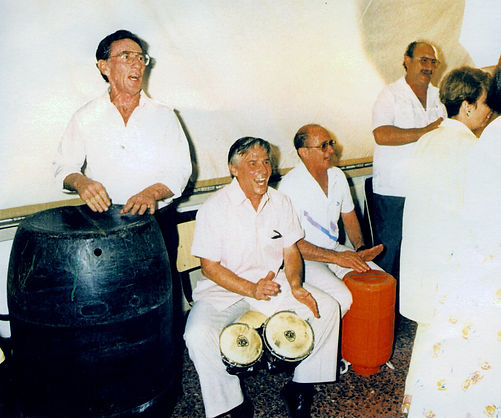
_jpg%20%D7%92%D7%A2%D7%A9%20%D7%A2%D7%9D%20%D7%A1%D7%91%D7%AA%D7%90%20%D7%91%D7%9C%D7%95%D7%9E%D7%A7%D7%94%20%D7%90%D7%94%D7%A8%D7%95%D7%9F%20%D7%A4%D7%A8%D7%9C%D7%94%20%D7%99%D7%95%D7%90%D7%9C%20%D7%97%D7%99%D7%99%D7%9D%20%D7%9C%D7%95%D7%99%D7%9F%20__%D7%9E%D7%95%D7%9C%20%D7%94%D7%91%D7%99%D7%AA%20%D7%A9%D7%9C%20%D7%A1%D7%91%D7%AA%D7%90%20%D7%91%D7%92%D7%A2.jpg)
We are honored to announce that on Thursday, June 28, 1951 the solemn inauguration of the Latin American kibbutz Ga'ash will take place in Israel. This kibbutz will be home to Latin American chalutzim, among whom is the group of Cuban Shomrim who came to Israel a year ago.
Kibbutz Ga'ash, the first Latin American kibbutz is made up of 150 young people from Argentina, Bolivia, Brazil, Chile, Cuba, Mexico and Uruguay, who belong to the Jewish generation that created the pioneering Zionist youth movement which formed the basis for the fulfillment of Zionism in Latin America.
Today, Kibbutz Ga'ash is self-sufficient, with an active social and cultural life, and 25 children who are its most beautiful and fresh flowers.
The above text is an excerpt from a letter in Yiddish that the acting community leader Sender Kaplan sent in June 1950 to the committees of the various Jewish institutions, announcing the creation of the first Latin American kibbutz, whose emergence and characteristics were briefly described.
Both the formation of the Latin American garin as well as the creation of the kibbutz were a direct result of the creation of the State of Israel, a crucial event that would radically change Jewish history and that decisively influenced not only the Jewish Yishuv in the Palestine of those days but also all the communities in the Diaspora. Hashomer Hatzair in Cuba was no exception and we will refer to these events in the following pages, with a range that brings together a collage of different times, situations and experiences that reflect the tireless strength and tenacity of its members.
From its earliest origins, the Movement had managed to overcome setbacks and did not stop its march. As noted in one of the preceding chapters, even in the thirties, when nobody conceived that Latin American Zionists could possibly realize the ideal of aliyah, two of the founders had achieved it thanks to the three certificates issued by the British Mandate and given to Cuba. What is more, to take advantage of the third certificate, one of the Shomrim had entered into a fictitious marriage with a young lady who belonged to the Movement. Just over a decade later, the 'inlaws' of that first oleh also made their own aliyah, as noted in a letter from the office of the Executive of the Jewish Agency sent to Cuba on September 12, 1947, reporting on the aliyah permits granted to family members of residents in Israel:
We enclose herewith the list of people in your country for whom, at the request of their family in Eretz Israel, the government Department of Aliyah has issued aliyah permits. These were authorized onJuly 15, 1947 (as part of the June 15-July 14 1947 quota), and are valid for six months from the date of authorization and have been sent to the British consul in Havana.
If any of the people on the attached list have already embarked, kindly provide us with the following information: port of departure, name of vessel (airplane), date, shipping company, etc.
Names: Niedzwietzky Jacob and Niedzwietzky Etka (inlaws).
In those early years, the Movement on the island provided ample evidence of its ability to combine continuity with renewal, promoting on the one hand initiatives and innovative projects to maintain the tradition of their regular activities, and on the other, continuing to act at the same time on behalf of the community in Cuba, the Jewish world in general and Israel in particular. For illustration only, we shall list three examples that demonstrate the aforementioned triangle:
The Jewish community in Cuba decided to honor the memory of the victims of the Holocaust with a memorial. As on other occasions, Hashomer Hatzair was represented, as noted by Daniel Kokiel:
Hashomer Hatzair influenced the entire community. We were always in the lead in demonstrations and parades for Israel, such as when we inaugurated a monument to the victims of the Holocaust in the cemetery.
A year before the creation of the State and aware of the post-war situation, the Movement in Cuba responded to a request from the Hanhaga Eliona in Israel, expressing solidarity and the desire to help Hashomer Hatzair in Poland. On May 17, 1947 they received a letter from the Hanhaga Eliona stating:
Remember and not to forget
Shomrim ENG.indd 82 10/2/201I enclose material received from the Movement in Poland, indicating that without the help of a global movement we cannot continue. The responsibility to help applies to us all. Your Movement, which already has more than ten years of membership in the global Movement and whose beginnings are related to the Movement in Poland will find a way to accomplish this campaign. I know that you will be able to call upon your links with our friends and colleagues who were once in Hashomer Hatzair
As expected, the Movement in Cuba responded immediately to the request and organized a campaign to collect funds (to be sent periodically to the Movement headquarters), as is clear from another letter from the Hanhaga Eliona dated two weeks later, on March 26:
I respond to your letter of March 22. We are very pleased that they have begun to act in the Movement in Poland. The decision to postpone the campaign is right.
Shoshana (Rosita) Rubinstein was at that time the secretary of the Movement, which she recalls fondly. From a young age she had worked in the Zionist Union and the office of the honorary consul of Israel, later in the consulate and then in the Israeli embassy until its closure. A few months after the emergence of the State of Israel, she sent a letter to Israel advising the following:
Thanks to the Hashomer Hatzair initiative the Cuban Jewish Blood Bank for Israel, was founded with 350 cm3 of dried blood and a $3,000 campaign that was used to provide medical supplies. The blood bank officials were Solomon Mitrani, president, Isaac Luski, treasurer and Jacob Laufer secretary.
Another report from the same period, reported on activities and listed the achievements of Hashomer Hatzair in Cuba:
The shaliach Chaim Reshef, has been a member of kibbutz Kfar Menachem for about four months and has joined us in Cuba, and recently we have noticed some improvement, meaning that the chaverim have begun working with a little more enthusiasm. The bogrim have gone to New York for the hachshara program and have already acclimatized to the job and the environment in general. We are engaged in ongoing correspondence with Mexico and Argentina, from whom we receive educational and political material that is useful for our MovemThe desire to promote the participation of its members in hachshara in the United States needed special efforts to overcome the problems that arose. The main obstacle lay in the difficulty of obtaining visas to enter the country, as explained in a letter to the Hanhaga Eliona in Israel in May 1949 from the shaliach, Chaim Reshef:
No one is asking himself yes or no about hachshara. In my opinion there should be hachshara and the only place for Cuba to join is the United States because the Cubans should not be left on their own or with other Latin Americans. This is my opinion, but the American consul in Havana does not care at all about these problems. He is not paying me any attention and not granting entry visas to the United States (despite my requests).
From hachshara in Hightstown the first garin of Hashomer Hatzair in Cuba would leave in trickles, numbering among others, Shoshana Brum-Levin, Jaime Falikson, Abraham Huberman, Jacob Laufer, Jaime Levin, Abraham, Chaim and Mordechai Lojewski, Yosef Shmuckler and Isaac Zilber . The significance of this decisive step in their lives meant that they did not leave anything to chance, as is clear from a letter sent in April 1949 while on hachshara, which combines the sending of detailed information in order to receive other information of a less detailed nature, and using a relatively high number of words in Hebrew, directly related to the core being of the Movement and life in the kibbutz:
Although we have not yet received a response to our recent letter dated February 19, we are forced to write again to inform you that two of our chaverim in the hachshara program here, will soon be joining our garin in Negba. The first is Isaac Zilber, who left Cuba on April 7, via Italy. We do not know when he will arrive in Aretz. He will send you a wire from the boat. His anaf is falja. The second is Abraham Huberman, who will leave New York on May 22. His anaf is construction and carpentry. If you answer this letter immediately, we will have time to send a few things with this chaver. What we want to know is the following: Is it worth carrying (a complete set of) woodworking tools. We know that power tools are extremely expensive in Israel. Tell us which ones the garin has and which ones are they are interested in.
Given the difficulties to receive financial aid from world Zionist bodies, in September of that year the group also sent another letter from the hachshara program, this time addressed to the Plenary of the Zionist Union and addressed to the Olim Relief Fund, another initiative promoted by the Shomrim. Noblesse oblige: this specific and urgent request is accompanied by an effusive expression of gratitude and
ShomrimenThe desire to promote the participation of its members in hachshara in the United States needed special efforts to overcome the problems that arose. The main obstacle lay in the difficulty of obtaining visas to enter the country, as explained in a letter to the Hanhaga Eliona in Israel in May 1949 from the shaliach, Chaim Reshef:
No one is asking himself yes or no about hachshara. In my opinion there should be hachshara and the only place for Cuba to join is the United States because the Cubans should not be left on their own or with other Latin Americans. This is my opinion, but the American consul in Havana does not care at all about these problems. He is not paying me any attention and not granting entry visas to the United States (despite my requests).
From hachshara in Hightstown the first garin of Hashomer Hatzair in Cuba would leave in trickles, numbering among others, Shoshana Brum-Levin, Jaime Falikson, Abraham Huberman, Jacob Laufer, Jaime Levin, Abraham, Chaim and Mordechai Lojewski, Yosef Shmuckler and Isaac Zilber . The significance of this decisive step in their lives meant that they did not leave anything to chance, as is clear from a letter sent in April 1949 while on hachshara, which combines the sending of detailed information in order to receive other information of a less detailed nature, and using a relatively high number of words in Hebrew, directly related to the core being of the Movement and life in the kibbutz:
Although we have not yet received a response to our recent letter dated February 19, we are forced to write again to inform you that two of our chaverim in the hachshara program here, will soon be joining our garin in Negba. The first is Isaac Zilber, who left Cuba on April 7, via Italy. We do not know when he will arrive in Aretz. He will send you a wire from the boat. His anaf is falja. The second is Abraham Huberman, who will leave New York on May 22. His anaf is construction and carpentry. If you answer this letter immediately, we will have time to send a few things with this chaver. What we want to know is the following: Is it worth carrying (a complete set of) woodworking tools. We know that power tools are extremely expensive in Israel. Tell us which ones the garin has and which ones are they are interested in.
Given the difficulties to receive financial aid from world Zionist bodies, in September of that year the group also sent another letter from the hachshara program, this time addressed to the Plenary of the Zionist Union and addressed to the Olim Relief Fund, another initiative promoted by the Shomrim. Noblesse oblige: this specific and urgent request is accompanied by an effusive expression of gratitude and
ShomrimtOf course, in this multiple voice chorus we did sometimes hear discordant or dissenting voices. The father of a Hashomer Hatzair pupil left a questionable but interesting assessment of the Movement's activities in Cuba, which was published in the almanac of 5710 (September 1949), published by Habaner Lebn (Life in Havana), the Yiddish magazine edited by Sender Kaplan and A. Dubelman:
It was a big mistake on our part to have tried to adapt the Cuban Jewish youth to the framework of Hashomer Hatzair. The discipline and the willingness of Hashomer Hatzair members to make sacrifices, cannot attract the young Jews of Cuba and therefore this is the reason why Hashomer Hatzair has graduated many youngsters, but few have remained. We must review our attitude to the problems of youth in Cuba. It's not too late, and the young people are not yet completely lost. The Jewish youngsters feel Jewish, and have great interest in everything that is happening in Israel and aspire to contribute in any way they can.
The dissidence went beyond the confines of Hashomer Hatzair. In 1950, Menachem Begin (Brest Litovsk, Poland 1913 – Jerusalem, Israel 1992), leader of the revisionist Herut party, commander of the Eztel, head of the parliamentary opposition and many years later (1979) signatory of the historic peace agreement with Egypt, came to Cuba. As expected, his supporters and members of the Beitar youth movement (who still had fresh in their memory, the two young Cubans who in 1948 had traveled to Israel as volunteers and who had perished on June 22 on the deck of the Altalena) organized a warm welcome, and as was also expected, other areas of the community did not share their enthusiasm. The reluctance was evident in varying degrees of intensity, and may perhaps be attributed to generation differences. The community leader, Sender Kaplan, on May 30, sent a letter sent to the Latin American department in New York saying:
Regarding the position of the Zionist movement, we considered the instruction not to participate officially in the welcoming or the banquet or any other official ceremony organized for Mr. Begin.
Not surprisingly, Hashomer Hatzair has interpreted the episode from another point of view. For his part, the then secretary of the youth movement, Archie Brum sent the Hanhaga Eliona in Merhavia the following report:
The first major event was the arrival in Havana of Menachem Begin on 14 May last. This placed the Movement in an unusual situation, since without Cuba having a Mapam party or other organization willing to come out with us in a united front, we had to stand alone in a campaign against
ShomrimHerut, which detracted from our strength. On the other hand, the local Zionist Organization maintained a totally passive attitude.
That same lengthy and detailed report includes other remarks that today not only bring at least a smile, but at that time also reflected the ideology of the Movement, whose strictness increased or decreased according to the times, but was never totally absent:
At the forefront our group unity was defined when, after extensive discussions, we decided to expel a chavera who, due to her snobbish behavior and irresponsibility towards the ken and the pluga, brought dishonor to the bogrim and the Movement. Another sensitive instance in the background, was the agreement to expel a chaver who, even though during previous years had been one of our strongest ideological pillars, today due to personal conflicts not connected to our active work and the bourgeois life he led, had changed his attitude, reaching a point where he was in denial of the pioneering values and the destiny of the shomric Movement.
Oy, what times were these when snobbery and bourgeois life were unacceptable sins! In this post-modern third millennium, in the shadow of the sunset of these ideologies, there is sometimes a temptation to yearn for the firmness of some of these convictions.
That was not the first confrontation between socialist Zionism and revisionism. In May 1947 the Zionist Union had received three telegrams from the Jewish Agency, exhorting the Jewish community to remain united and express its strong opposition to the activities of the Irgun. One of them was signed by Moshe Shertok [later Sharett] (Kherson, Ukraine 1894 - Jerusalem, Israel 1965), for many years director of the Political Department of the Jewish Agency and later Foreign Minister and Prime Minister of the State of Israel. The second telegram was signed by Moshe Toff (Villa Maria, Argentina 1910 - Jerusalem, Israel 1989), director of the Latin American Department of the Jewish Agency in Washington and after the creation of the State of Israel, director of the Latin American Department of the Ministry of Foreign Affairs Affairs). The third telegram was not signed.
This brief and intense review of the activities of Hashomer Hatzair in the late forties and early fifties resembles a circular path, in which we again approach the point of departure. Undoubtedly, the establishment of Ga'ash is a crucial milestone in the history of the Movement, not only in Cuba but throughout Latin America, and we will dedicate the remaining pages to it. A copy of the Hashomer Hatzair magazine devoted a central feature to Ga'ash at the The meshek has received a boost in recent months, thanks to the transfer of the latest building materials that were in Ali Kassem and have been relocated to the nekuda in Ga'ash. Among the advances that have been achieved in this field and which should be mentioned, are the construction of the water tower on the highest hill of the kibbutz, with a capacity of 100 cubic meters, that will supply the needs of the machane, expansion of the existing lul into three new sections, the enclosure of the communal areas that will be inaugurated later this month, the planting of 50 dunams of pardes which will be commenced in the coming weeks and the creation of a new anaf to receive 200 sheep. In the coming days we will begin the construction of the first children's house made of solid materials.
In terms of the cultural-ideological aspects, the main activities are concentrated around study groups which were created after the moatza of Ein Hamifratz decided on compulsory study. The Tanach course hosts 20 permanent chaverim, and there is the choir, whose work has been reinforced thanks to the help of a chaver conductor from Kibbutz Yakum and the drama class.
It is clear that for a year and a half prior to the foundation of the kibbutz in July 1951, about 6 miles north of Tel Aviv, its members lived temporarily on the farm of Ali Kassem, a wealthy Arab not far from there. He later abandoned it after the War of Independence. Many years later, Isaac Zilber would remember that time with a number of fresh and colorful prints, portraying the founding period with a mixture of nostalgia, humor and subtle irony:
Ali Kassem times (El bloguito de Saqui) Ga'ash 2010
We were poor, very poor, but we were poor by choice, accompanied by pride. The pride of the chalutz who began from scratch to serve the needs of the State: colonization, agriculture, and territorial defense. The kibbutz was a way of life and also a barricade. We wanted to establish ourselves in Um-Rashrash (now Eilat), the most chalutzic place at the time. We did not want to be so close to Tel Aviv (foo!). Today, from the real-estate perspective, we would not have lost, as if anyone cares. However, the State institutions had a very convincing argument favoring the place where we lived - it was in the narrowest part of the country (12 km from the coast to the border).
Abraham Drori was the treasurer and every two weeks he brought a battered briefcase containing the meat rations allocated to the entire kibbutz. He traveled by bus (yes, there was something like that, and
Shomrimend of 195even today, after so many years, many veterans retain the old and strange habit of traveling by bus, see the entry 'bus' in the dictionary). The meat was wrapped in newspaper, as was everything that was sold at the time, and the briefcase also contained the correspondence of the kibbutz brought from a mailbox in Tel Aviv and the bills permeated by the odor of the meat, that for some reason did not bother anyone. On the contrary, it was the meat ration for the entire kibbutz for the next two weeks. I do not remember what the monthly allowance was per person, perhaps 100 grams, but I remember that after removing a generous portion for children, the remainder was used for meatballs with just 5% meat content, not coming close to or even resembling the taste of it.
In the rooms there was no running water. There were water faucets, one for each cabin, that reached up from the ground to knee height. There were shared showers, one for girls and one for boys. Fifty years earlier we had heard stories about the communal showers for both sexes. We had heard them, but evidently we came too late. The showers were in a cubicle made of zinc, with a partition also made of zinc which divided it into two and had been used by the military for target practice. But do not misunderstand me: We were not spying!
At first we lived in barracks and tents, and later we replaced the tents with cubicles made of zinc and I still don´t not know what was worse, because those cubicles seemed like ovens in summer and refrigerators in winter, but they were the choices available to the singles, two in a room in a hut, or one in a cubicle. The huts had no stairs, so we had to clamber over the balcony, which was something minor for strong and healthy youngsters, but what were we to do when it came to climbing a height of 40 cm? And what if the youngster was a woman in the final months of pregnancy? One of our colleagues, whose wife met both conditions (40 cm and in the late stages of pregnancy) found a step which solved the problem, or so he thought so, until he was summoned to the kibbutz members' committee, which considered it a flagrant violation of equality and cooperation (or vice-versa). There were several meetings, in which he claimed in his defense that despite living in the last room, he had placed the step ladder in the middle for everyone to use. Finally the criteria "to each according to their need" prevailed.
A few months after the founding of the kibbutz, the Pro-Cuban chalutzim in Israel Youth Association was established in Havana, promoting a campaign to support Ga'ash. FoSerra, inviting people to a meeting for which we request written support from our community.
The culmination of this intense and enthusiastic period tied the loose ends of the plot of this particular story that emerged in the aura of the reborn State of Israel. The fulfillment of Zionism, the founding of a kibbutz, youthful enthusiasm, ideological fervor, the critical tone and the generation conflict, were all mentioned in a handwritten letter in Yiddish, neatly printed with impeccable handwriting, sent from Kibbutz Ga'ash to the Zionist Union of Cuba:
I write this letter as a Cuban chalutz, a son from the Jewish yishuv in Cuba, who chose Zionism as the way to honor the Jewish people. For me, Zionism is sacred, because it has shown me the light to which I have dedicated my heart and soul in order to help build the country for the thousands of olim who will soon return to their homeland and find it rebuilt and thriving. We are waiting for the dozens of Cuban chalutzim marching along the same Zionist path, who are not content with declarative Zionism but rather wish to bring it to fruition in a practical manner. And to you fellow Cuban Zionists, rather than being the ones to awaken Jewish youth and teach them the duties of Zionism, unfortunately your work is
The Pro-Cuban chalutzim in Israel Youth Association made it its primary objective to send a truck to the first Cuban chalutzim to arrive at Kibbutz Ga'ash, thus contributing directly to the work of national reconstruction.
For the purpose of initiating this campaign in our yishuv we will go out with a broadcast on Thursday January 17 at 12:30 pm from the Zionist Union of Cuba, on 660 kilocycles, from Radio Garcíabeing done by the youngsters born in Cuba, who see their parents as if they are conspiring against our sacred ideal, and are obligated to remind you [the parents] that Zionism is not what you should are talking about within your organization.
Our colleagues in Cuba will not go in your direction, only in ours.
Signed: A Cuban chalutz
Cuban-Israeli Digression: Ricardo Subirana and Lobo (Richard Wolf)
The attempt to tell the story of the Cuban Shomrim in Israel would not be complete unless we digress for a moment from the main thread of the story and introduce an unconventional character who was not born in Cuba and had not been a member of Hashomer Hatzair, but whose life and career were inextricably linked to Cuba and Israel.
Richard Wolf was a multifaceted Jew born in 1887 in Hanover, Germany, who left his country before the First World War and settled in Cuba, which became his second home. In 1924, he married the tennis player Francisca Subirana and hispanicized his name adopting the surname of his wife, and becoming known as Ricardo Subirana and Lobo.
He was the first ambassador of Cuba in Israel, a position he held from 1961 until the breaking of diplomatic relations between the two countries in 1973. He chose to remain in Israel and retained smooth and ongoing contacts with Cubans in the country, who still attended the meetings organized at his home, and on the neighboring Kibbutz Ga'ash. Both he and his wife died in 1981 and were buried at Ga'ash.
Shomrimr4
גרעין עליה הראשון מקובה : חלום שהתגשם
אנחנו שמחים לבשר לכם שביום חמישי ה 28- ביוני 1951
תתקיים החנוכה החגיגית של הקיבוץ הלטינו-אמריקני געש
במדינת ישראל.
חברי קיבוץ זה הם חלוצים לטינו-אמריקנים
ואיתם נמנית גם קבוצת השומרים הקובנים שעלו ארצה לפני
שנה...
געש – הקיבוץ הלטינו-אמריקני הראשן – מונה 150 צעירים
שהגיעו מאורוגוואי, ארגנטינה, בוליביה, ברזיל, מקסיקו, צ'ילה
וקובה, והם חלק מהדור היהודי שהקים את התנועה הציונית
החלוצית שהפכה לבסיסה של הציונות המגשימה באמריקה
הלטינית.
נכון להיום, לקיבוץ געש יש מקורות ייצור משלו, חיים
תרבותיים וחברתיים פעילים מאוד ו 25- ילדים שהם פרחיו
היפים והרעננים ביותר...
הטקסט הקודם הופיע במכתב ביידיש שנכתב ביוני 1950 על
ידי העסקן הקהילתי סנדר קפלן ונשלח לוועדות המנהלות של
המוסדות היהודיים השונים. המכתב בישר על הקמת הקיבוץ
הלטינו-אמריקני הראשון, תאר את ראשית דרכו ומנה את אפיוניו
המרכזיים.
הקמת הגרעין הלטינו-אמריקני והקמת הקיבוץ היו תולדה
והמשך ישיר של הקמת מדינת ישראל, אירוע מכונן ששינה את
ההיסטוריה היהודית בת-זמננו ושהשפיע השפעה מכרעת לא
רק על היישוב היהודי בפלסטינה המנדטורית, אלא על הקהילות
היהודיות בתפוצות באשר הן. השומר הצעיר בקובה לא היה יוצא
מהכלל ולזה נתייחס להלן, בפריסת מניפה שתלקט אירועים,
מצבים וחוויות המשקפים את מרצו ואת תנופתו.
מאז ימי הבראשית הלא רחוקים שלה, הצליחה התנועה להתגבר
על המכשולים ולא להיעצר. כפי שצוין באחד מהפרקים הקודמים,
עוד בשנות השלושים – כשאיש לא העז לחלום שחלוצי אמריקה
הלטינית יממשו את חזון העלייה – הצליחו שניים מהמייסדים בכך
הודות לסרטיפיקטים שהנפיק המנדט הבריטי ושהוקצו לקובה.
זאת ועוד: כדי לנצל גם את הסרטיפיקט השלישי, אחד מהשומרים
נשא בנישואים פיקטיביים צעירה שגם היא הייתה חברה בתנועה.
הישגי התנועה מבחינת ההגשמה הציונית חרגו משורותיה שלה,
כפי שניתן ללמוד מאפיזודה בעלת משמעות סמלית: קצת יותר
מעשור לאחר הנפקת הסרטיפיקטים הנ"ל, גם "החותן והחותנת"
של אותו עולה ראשון זכו לאישורי עלייה משלהם, כפי שמתואר
במכתב שההנהלה הסוכנות היהודית שלחה לקובה ב 12- ספטמבר
1947 בעקבות רישיונות העלייה שהונפקו לטובת קרובי המשפחה
של תושבי הארץ:
אנחנו מצרפים למכתב זה את רשימת האנשים בארצכם
שלמענם הנפיקה המחלקה לעלייה רישיונות עלייה, בהתאם
לבקשות שהועלו על ידי קרובי המשפחה שלהם...
בשנים הראשוניות ההן, הוכיחה התנועה הקובנית את יכולתה
לשלב בין המשך קו פעולתה לבין חידוש ופתיחות; לקדם יוזמות
ופרויקטים חדשניים מחד ולהתמיד מאידך בפעילותה ביחס
לקהילה היהודית בקובה, העולם היהודי בכלל ומדינת ישראל
בפרט. לשם המחשה בלבד נביא דוגמאות אחדות המממשות את
המשולש שהוזכר כבר.
Shomrim2


